
The 50-stock NSE barometer Nifty finished 14.75 points, or 0.14 per cent, down at 10,382.70 after shuttling between 10,340.65 and 10,393.15.

Equity markets will look for directions from global trends, ongoing quarterly earnings and investment patterns of foreign institutional investors (FIIs) in a holiday-shortened week ahead and may encounter volatility amid the scheduled monthly derivatives expiry, according to analysts. Equity markets will remain closed on Wednesday on account of 'Republic Day'. "This week is a holiday-shortened one and it's going to be critical due to the list of events and data that are lined up.

The demand for gold is expected to take a hit if the price of the yellow metal - which has been hovering around Rs 60,000, a level never seen before - remains elevated. Due to a sharp increase in price in a very short time and the flow of smuggled gold continuing, gold price in Mumbai is quoted at around Rs 59,000 per 10 gram. Typically, overall demand in the January-March and July-September quarters is moderate-to-dull, which is the case in the ongoing period.
The rupee ended almost flat against the dollar.

Reserve Bank of India (RBI) Governor D Subbarao, often criticised for being "behind the curve", took market players and his critics by surprise.
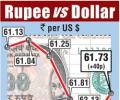
Forex dealers said besides a lower opening in the domestic equity market on fears of a rate hike by the Reserve Bank, higher demand for the American currency from importers put pressure on the rupee but dollar's weakness against other currencies overseas, capped the fall.
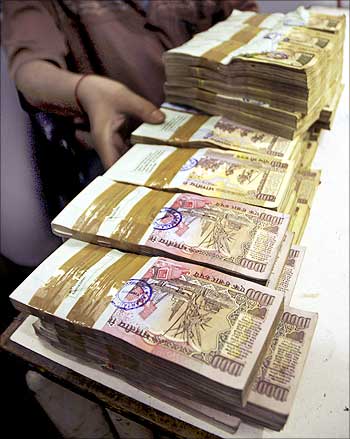
The local currency had gained 7 paise to close at 66.57 in Monday's trade.

RBI Governor flayed easy monetary policy of central banks in advanced economies saying it is "more cause than medicine".

RBI will take a cue from the Fed policy statement.
HDFC Bank, the country's second-largest private sector bank, has cut its base rate by 15 basis points (bps) to 9.70 per cent.

The currency market won't care for our moans, groans, cries and sighs. The rupee will find its own level, explains Tamal Bandyopadhyay.
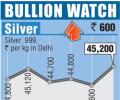
Silver also recovered Rs 600 to Rs 45,200 per kg on increased offtake by industrial units and coin makers.

"I think the Fed is out of control. I think what they're doing is wrong. Under the Obama administration, you had a lot of help because they had very little interest," Trump told reporters at the White House Thursday while responding to questions on the down sliding of the stock market for a second consecutive day.

SBI is the first major state-run bank to hike lending rates after short-term rates rose as a result of the Reserve Bank of India's liquidity tightening moves announced in July.

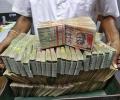
If struggling with dealing with queues of people asking for new notes wasn't enough, banks are now facing the challenge of storing the old notes in their strong rooms.

If the CBDCs don't offer interest, why will people shift from cash to CBDCs?, asks Tamal Bandyopadhyay.

The Enforcement Directorate on Monday seized three offices in a prime location in Mumbai, valued more than Rs 41 crore, as part of a foreign exchange violation probe against a businessman whose name figured in the Panama Papers.
Weak equity markets too hit rupee sentiment
The rupee weakened even as the dollar fell against major global currencies

All policy planners want low interest rate, says Jaitley

In India, it is not easy to fight it out with the large banks which are nimble-footed and technology-savvy and are continuously innovating on the retail turf with newer products for customer acquisition.
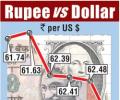
The previous bout of Fed withdrawal fears had threatened to spark a crisis of confidence in India -- sending the rupee to a record low of 68.85 in late August and leading to steep falls in bonds and stocks.

'Helicopter drop' was first proposed as an alternative to quantitative easing.

Equity benchmarks Sensex and Nifty halted their five-day rally on Tuesday and settled deep in the red, mirroring weak global markets, with decline in index heavyweights Reliance Industries, Infosys and HDFC Bank. Despite opening with gains of over 200 points, the 30-share Sensex turned highly volatile and tumbled 709.17 points or 1.26 per cent to close at 55,776.85. During the day, the benchmark index plunged 1,067.07 points or 1.88 per cent to 55,418.95. The broader NSE Nifty also declined 208.30 points or 1.23 per cent to close at 16,663.

The rupee has been falling for five straight weeks, taking its losses this quarter to 6.6 per cent, making it the worst performing currencies in Asia during this period.

Analysts say that the focus now shifts to global events

'These are interesting days for watchers of English cricket and central banking,' points out Amol Agrawal.

Nestle India, HCL Tech, M&M, HDFC Bank, Maruti and Tech Mahindra were also among the losers. NSE Nifty tumbled 97.70 points to 11,202.85.

'If rate cuts happen, bond yields will come down and investors will make mark-to-market capital gains on them.'

The gold market has remained under pressure.
.jpg)
The penalty was levied in connection with deficiencies and lapses in the operation and maintenance of the currency chest at the Secunderabad branch of SBI, it said. Last month, the RBI had imposed a penalty of Rs 3 crore (Rs 30 million) on SBI for violating know your customer/anti-money laundering norms.

Despite markets turning volatile, share sale activity at India Inc has surged to its highest level in five months. So far in March, promoters, strategic investors and other large shareholders have been able to offload shares worth more than Rs 33,000 crore-the most since November-defying uncertain market conditions. Both the Sensex and the Nifty are on course to post their fourth straight monthly loss amid headwinds, such as interest rate tightening by the US Federal Reserve and the global banking crisis.

Investor wealth on Thursday soared by Rs 1 lakh crore, triggered by heavy buying in the stock market, with the BSE benchmark Sensex surging about 382 points to close at near six-week high levels.

Investors globally pulled out more than $3 billion from equity funds focused on Emerging markets including India in a week amid concerns over the US Federal Reserve's plan of curtailing its stimulus drive starting later this year.

You also avoid capital gains tax during redemption in case the gold price is higher, making them tax efficient.

As lobbying and counter-lobbying intensify, right now, it looks like a T20 match, discovers Tamal Bandyopadhyay.
The rupee on Thursday plunged by a whopping 130 paise to hit life-time low of 60 against the US dollar in early trade on the Interbank Foreign Exchange on strong demand for the American currency from banks and importers

Tamal Bandyopadhyay offers some unsolicited advice for a government wh,ich came to power, with brute majority and the nation's pragmatic chief money man.
Traders said good dollar demand from importers including oil companies was seen at stronger rupee levels, limiting any further gains.

Foreign fund flows into and out of the domestic sharemarket will continue to be key for the rupee's fortunes.
